

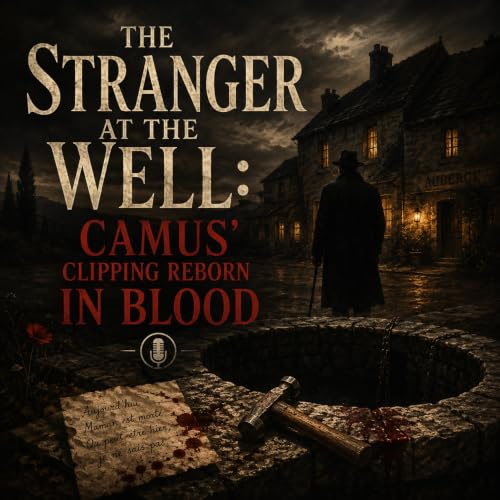
The Stranger at the Well: Camus’ Clipping Reborn in Blood
Failed to add items
Add to basket failed.
Add to wishlist failed.
Remove from wishlist failed.
Adding to library failed
Follow podcast failed
Unfollow podcast failed

The Stranger at the Well: Camus’ Clipping Reborn in Blood
-
Narrated by:
-
By:
This episode explores Sean Dempsey’s short story “Rich Man at the Well,” a self-contained breakout narrative deliberately built from the haunting newspaper clipping in Albert Camus’ The Stranger. In Camus’ novel, the anecdote appears briefly: a Czech man returns home wealthy after twenty-five years, hides his identity as a surprise, and is murdered by his mother and sister for his money before they realize who he was. Dempsey takes that small, chilling fragment and turns it into a full emotional tragedy, giving names, motives, poverty, atmosphere, memory, and moral weight to what Camus leaves stark and detached.
The hosts focus on how Dempsey transforms Camus’ almost clinical absurdist parable into something intimate and devastating. Jakub’s fatal decision to return as a mysterious rich stranger is not treated merely as a foolish trick, but as the spark that ignites decades of longing, class resentment, humiliation, and desperation. Maria and Klara are not just murderers in an anecdote; they become broken human beings trapped in decay, pushed toward evil by need, bitterness, and the false promise of rescue. The hammer, the inn, and especially the well become symbols of inheritance, memory, and the abyss beneath family itself.
The episode ultimately contrasts Camus’ absurdism with Dempsey’s more emotionally exposed retelling. Camus presents the clipping as evidence of life’s brutal indifference; Dempsey descends into the clipping and asks what it would feel like to live inside it. For a 2026 audience, the story becomes a meditation on deception, poverty, wealth, guilt, and the terrifying fragility of human recognition — the idea that the difference between kin and stranger can vanish in a single night, and that once blood is spilled, truth may arrive only as punishment.