Episodes

  • NBA Expansion, Media Rights and the Future of Basketball with Mark Tatum 6/18/26
    Jun 18 2026

    Episode Summary

    NBA Deputy Commissioner Mark Tatum joins Alex Sherman to discuss the league’s surging ratings, new media partnerships, international expansion plans, ticket accessibility, draft lottery changes, and how AI could shape officiating. The conversation offers a high-level look at where the NBA is headed across Europe, Africa, Seattle, Las Vegas, and beyond.

    Episode Notes

    NBA Deputy Commissioner Mark Tatum joins Alex Sherman for a wide-ranging conversation on the business, growth, and future of professional basketball. Tatum discusses why NBA ratings are climbing, how new media partners like NBC and Amazon are helping tell player stories, and why the league sees major long-term opportunities in Europe, Africa, and domestic expansion markets. The episode also covers the economics of NBA Finals ticket prices, the league’s approach to fan accessibility, the evolving draft lottery system, and how technology and AI may assist referees with calls in the future. Plus, sports professor Rick Horrow joins the podcast to talk this week in sports.

    Topics discussed:

    • Why NBA regular season and playoff ratings have surged
    • The impact of star players, competitive balance, and Finals viewership
    • How NBC, Amazon, ABC, and ESPN support NBA storytelling and distribution
    • President Donald Trump attending Knicks-Spurs NBA Finals Game 3
    • Jim Dolan, the New York Knicks, and the team’s Finals run
    • High NBA Finals ticket prices and secondary market dynamics
    • NBA Europe expansion plans and the target launch timeline
    • What the NBA is looking for in European ownership groups
    • Potential NBA Europe cities, investors, media partners, and competition model
    • Basketball Africa League growth, investor interest, and economic opportunity
    • Domestic NBA expansion discussions around Las Vegas and Seattle
    • Other possible future markets, including Mexico City and Vancouver
    • Draft lottery reform, anti-tanking incentives, and the proposed 3-2-1 system
    • Player availability, regular season length, and the role of the Emirates NBA Cup
    • AI and technology in officiating, including goaltending reviews

    Timestamps:

    01:43 New NBA media rights partners, NBC, Amazon, ABC, and ESPN
    02:35 President Trump attending Knicks-Spurs Finals Game 3
    03:46 Jim Dolan, the Knicks, and the team’s turnaround
    04:49 NBA Finals ticket prices and fan accessibility
    07:01 NBA Europe expansion plans and possible launch timing
    08:46 What makes a desirable NBA Europe owner
    09:36 How NBA Europe could interact with NBA teams
    11:50 NBA Africa investment opportunity and Basketball Africa League growth
    14:07 Media partner interest for NBA Europe
    15:10 Domestic expansion focus on Las Vegas and Seattle
    17:09 Draft lottery reform, anti-tanking, and competitive balance
    19:21 The ongoing Aspiration lawsuit process
    20:32 Regular season length, player availability, and the Emirates NBA Cup
    22:39 Potential NBA rule changes and competition committee priorities
    23:23 AI and technology in NBA officiating

    Mentioned in this episode:

    • NBA
    • NBA Finals
    • New York Knicks
    • San Antonio Spurs
    • NBC
    • Amazon
    • ABC
    • ESPN
    • Basketball Africa League
    • NBA Europe
    • FIBA
    • Emirates NBA Cup
    • Madison Square Garden
    • Garden of Dreams Foundation
    • Las Vegas
    • Seattle
    • Mexico City
    • Vancouver
    • Summer League
    • AI officiating technology


    Hosted by Simplecast, an AdsWizz company. See pcm.adswizz.com for information about our collection and use of personal data for advertising.

    Show More Show Less
    34 mins
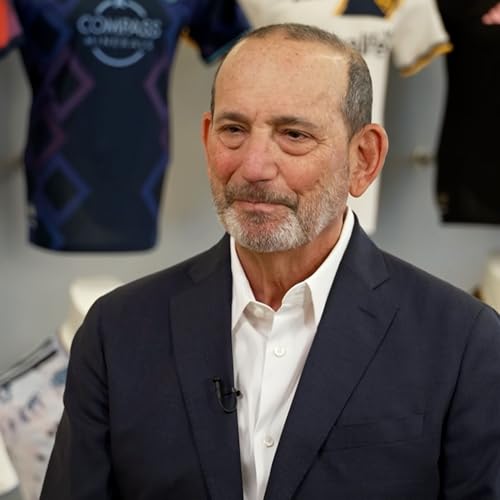
  • Don Garber on MLS 3.0, Apple TV strategy, and World Cup 2026 rocket fuel 6/11/26
    Jun 11 2026

    MLS commissioner Don Garber breaks down why the 2026 World Cup is “rocket fuel” for Major League Soccer—and what metrics (attendance, media coverage, social growth, and player movement) will prove it. He also explains MLS 3.0, the league’s post-World Cup calendar shift, and what he’d change about the Apple TV model as MLS plans its next media rights chapter. Alex also speaks with Mark Trübenbacher, CEO of Stadium Growth Lighting. They are the company in charge of preserving the grass on every World Cup pitch.

    Key topics and takeaways

    • How MLS plans to measure the World Cup effect: attendance lift, media coverage, social followers, fan engagement, and talent inflow after 2026
    • “This game on us”: why 22 MLS teams plan free tickets for the first match after the World Cup to convert new fans
    • What MLS 3.0 means: post-World Cup strategy, new calendar format, roster rule updates, and increased marketing/content distribution
    • Calendar realignment: moving toward the international calendar to better match transfer windows and global competition
    • Building a global league: brand ambitions, club valuations, and why MLS wants more than one globally recognized team
    • Life after Messi in Miami: why Garber believes Inter Miami can sustain global momentum beyond a single superstar
    • Apple TV partnership lessons: why MLS took the risk, what worked, and why the paid-subscription “experiment” didn’t fully land (yet)
    • Next media deal strategy: Garber’s case for multiple partners and why “streaming reach” can be misunderstood vs. linear reach
    • CBA priorities (expiring after the 2027 season): player access, biometrics/data, and how AI is becoming embedded across the business
    • Integrity and betting: prediction markets, risk controls, FIFA monitoring, and Garber’s mention of a deal with Polymarket
    • Succession planning: what Garber says about his contract through 2027 and the league’s ongoing search process
    • World Cup logistics and ticket pricing: why he expects concerns to fade once the tournament begins, and how FIFA executes at scale

    Timestamps

    • 24:08 World Cup 2026 as “rocket fuel” + how MLS will measure the impact
    • 25:57 Why World Cups tend to create a pro-league “bump” (and what matters more long-term)
    • 27:22 “This game on us” free-ticket push after the World Cup
    • 27:53 What MLS 3.0 is and what changes after 2026
    • 31:00 Calendar shift + transfer-window alignment
    • 32:01 Valuations, global brand building, and competing with top European clubs
    • 34:44 Agree/Disagree: fan growth and league competition
    • 37:30 Apple TV deal, innovation, and the limits of the paywall model
    • 39:27 Why the next MLS media deal may need multiple partners
    • 41:03 CBA issues: player access, biometrics, and AI
    • 43:20 Betting integrity, monitoring systems, and Polymarket
    • 44:47 Garber on succession and his 2027 timeline
    • 49:30 World Cup concerns: politics, logistics, and ticket pricing
    • 51:36 FIFA operations at scale and why the in-stadium experience wins

    Links & resources

    • Major League Soccer: https://www.mlssoccer.com/
    • MLS Season Pass (Apple TV): https://tv.apple.com/
    • U.S. Soccer: https://www.ussoccer.com/
    • FIFA: https://www.fifa.com/
    • Polymarket: https://polymarket.com/

    Hosted by Simplecast, an AdsWizz company. See pcm.adswizz.com for information about our collection and use of personal data for advertising.

    Show More Show Less
    37 mins
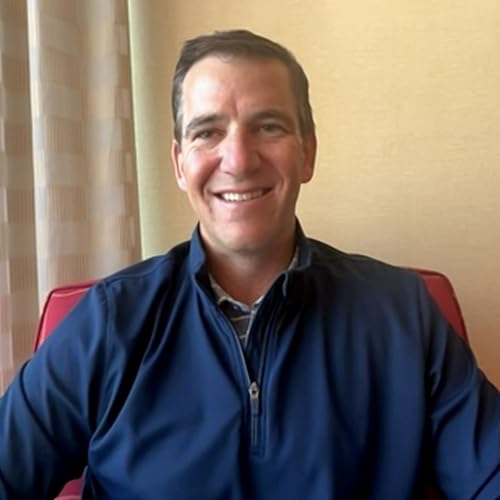
  • Eli Manning on youth sports, Jaxson Dart’s future and the Knicks’ playoff run 6/4/2026
    Jun 4 2026

    RCX Sports has been building a youth sports platform around pro-league partnerships—now it’s scaling with new investment. In this conversation, host Alex Sherman sits down with Eli Manning and RCX Sports CEO/founder Izell Reese to break down the acquisition by Brand Velocity Group (BVG), how the business works, and the bigger question: can private equity and “keep it affordable” youth sports actually coexist?

    They explain RCX’s model as a services-and-licensed-gear engine supporting local organizations like Parks & Recs and YMCAs, while licensing pro league branding for uniforms and equipment—what Reese describes as “Little League baseball meets fanatics.”

    Eli frames the investment thesis in human terms: access, life lessons, and grassroots community reach—plus the built-in fandom flywheel when kids play under real NFL team logos at a young age.


    Hosted by Simplecast, an AdsWizz company. See pcm.adswizz.com for information about our collection and use of personal data for advertising.

    Show More Show Less
    22 mins
  • French Open Economics: Brad Gilbert on player protests, unions and TV changes 5/28/26
    May 28 2026

    Broadcasting from Paris during the French Open, Brad Gilbert joins Alex Sherman to unpack the business of tennis through three lenses: playing, coaching, and broadcasting—plus what’s really happening behind the scenes right now at Roland Garros.

    Gilbert argues tennis is in a healthy place globally, but remains star-driven—especially in the U.S. market. From there, the conversation moves into the divergent dynamics of the men’s and women’s tours, why combined events matter, and whether tennis should eventually operate as a single unified tour.

    A major theme is player power: Gilbert revisits the ATP’s modern structure, explains why independent-contractor status makes collective bargaining difficult, and lays out what unions could change—particularly for players ranked outside the top tier who are paying their own travel, coaching, and support-team expenses. The episode also connects those economics to youth development and the pressure on families to “go all in” early, with Gilbert emphasizing balance and education even for elite prospects.

    Later, Sherman digs into the coaching marketplace—how coaches get hired, what contracts actually look like in tennis, and why relationships can end quickly in a results-driven environment. Gilbert also reflects on his broadcasting career, including the end of his long ESPN relationship and his current work with Tennis Channel and his podcast.

    Key topics covered:

    • The state of tennis today and why it’s still a global, star-driven sport
    • Men’s vs. women’s tour dynamics and the value of combined events
    • One tour vs. two: the case for ATP/WTA alignment—and the complications
    • Why player unions matter, and how prize money debates tie to power and governance
    • The economic squeeze on players outside the top 100 (and why Slams matter most)
    • Youth tennis pathways: academy pressure vs. education and long-term development
    • The business of coaching: week-to-week realities, incentives, and “bigger better deal” moves
    • Broadcasting career shifts: ESPN contract ending, Tennis Channel, and new media projects
    • French Open outlook, including conditions, favorites, and how heat can change outcomes

    Timestamps:

    • 01:57 Men’s vs. women’s tour health and the impact of combined events
    • 02:55 Should ATP and WTA merge—and what would it take?
    • 03:48 Player protest context, prize money, and why unions change leverage
    • 05:32 Who benefits most from higher payouts (and why rankings matter)
    • 07:04 Youth tennis development, risk, and the case for balance + education
    • 10:32 The business of coaching: how deals form and how coaches get paid
    • 13:32 Why some coaching relationships last—and others end fast
    • 14:29 Broadcasting business: ESPN departure and career transitions
    • 17:15 Tennis Channel work, podcasting, and building audience in new ways
    • 18:10 French Open predictions, heat-wave impacts, and betting-style “field” logic

    Hosted by Simplecast, an AdsWizz company. See pcm.adswizz.com for information about our collection and use of personal data for advertising.

    Show More Show Less
    30 mins
  • Utah sports owner Ryan Smith on the Jazz reset, tanking debate and Jazz-Mammoth synergies 5/21/26
    May 21 2026

    What you’ll hear in this episode

    • Why the Jazz chose an organizational reset—and how owners weigh “push forward” vs. “scale back” when assets, caps, and timelines collide
    • The incentives (and controversy) behind tanking, including Utah’s NBA fine and what the league may change next
    • How a top lottery pick can reshape an NBA franchise faster than almost any other sport
    • Why Ryan Smith prioritizes passion-fit in sports ownership (and why he stepped away from soccer)
    • The Utah Mammoth’s early momentum: building a new fanbase, culture, and “firsts” from the ground up
    • A behind-the-scenes look at a unique shared hub for pro basketball and hockey—including community access and integrated sports medicine
    • The future of regional sports networks: reach vs. revenue, direct-to-consumer streaming, free over-the-air broadcasts, and what comes next for NBA local rights

    Timestamps

    • 01:44 — Why the Jazz chose a full reset and stockpiled draft assets
    • 03:33 — Tanking incentives, the NBA fine, and whether the league should intervene
    • 07:29 — Draft lottery reform ideas (including “flat odds”) and unintended consequences
    • 10:03 — No. 2 pick stakes and whether “Utah ties” matter in draft decisions
    • 13:06 — The Jazz/Mammoth shared facility vision: practice, corporate hub, and community access
    • 15:35 — What surprised Ryan about owning an NHL team and why Utah embraced hockey fast
    • 18:30 — Expansion mindset in sports ownership and why it’s “addicting”
    • 20:25 — Why Smith exited soccer ownership: timing, focus, and personal passion
    • 22:24 — Jazz Plus, local broadcast reach, and how regional sports media may evolve
    • 28:16 — The biggest surprise of sports ownership: fandom, live events, and city impact

    Hosted by Simplecast, an AdsWizz company. See pcm.adswizz.com for information about our collection and use of personal data for advertising.

    Show More Show Less
    40 mins
  • Ronda Rousey Talks Fighter Pay, Streaming Wars, and Her Return Fight With Gina Carano 5/14/26
    May 14 2026

    Ronda Rousey joins Alex Sherman to unpack the economics of MMA, why UFC fighter pay remains a structural issue, and how the streaming era could reshape the business of fighting. Starting from the realities faced by lower-tier athletes—minimum per-fight guarantees, coach percentages, and taxes—Rousey explains how quickly “big league” fighting can still add up to poverty-level income. She argues the core problem is leverage: without credible alternatives to the UFC, fighters are stuck with take-it-or-leave-it contracts.

    Rousey outlines why she believes streaming is the inflection point. In her view, streamers can pay upfront for premium fight content in a way that reduces reliance on traditional pay-per-view mechanics—and makes it feasible to build meaningful competition. She describes her push to work with MVP and why she sees Netflix as the only platform big enough to truly challenge the UFC at scale.

    The conversation also covers Rousey’s upcoming return to fighting against Gina Carano—how the matchup idea originated, why early UFC talks didn’t ultimately land, and how the modern distribution shift changed the opportunity set. Rousey contrasts the classic pay-per-view structure (earning a share per view) with the newer streaming-first deal model, noting she can’t disclose exact numbers yet but expects details to be publicized after the fight.

    Beyond the money, Rousey makes the case that fight promotions win when they sell stories, not just belts or brands—pointing to how major streaming events can draw massive attention when audiences care about the fighters involved. She also reflects on the overlap between combat sports and entertainment, her path through WWE and acting, and the mindset she brings to competition—whether she likes an opponent or not.

    Key topics covered

    • Minimum UFC pay math and why three fights a year can still be “poverty level”
    • Why competition (not just incremental raises) is the leverage fighters need
    • How the streaming model changes MMA economics and upfront rights payments
    • Why Rousey believes fewer, bigger “can’t-miss” cards could outperform oversaturation
    • Pay-per-view incentives vs. streaming deal structures for top fighters
    • Storytelling, star power, and why audiences tune in to fighters—not just titles
    • WWE culture vs. MMA culture, and the entertainment skill set behind pro fighting

    Timestamps

    • 01:31 Why minimum per-fight pay can translate into “poverty level” annually
    • 01:48 Rousey’s fix: competition and a real alternative to the UFC
    • 03:25 Oversaturation vs. “can’t-miss” marquee fights (fewer events, stacked cards)
    • 04:36 How the Gina Carano comeback idea came together
    • 06:13 How pay-per-view fighter compensation works (per-view share)
    • 06:43 Streaming-era pay models and why specific numbers can’t be shared yet
    • 08:43 Relationship with Dana White vs. the UFC as a company
    • 11:49 Why fighting and acting careers overlap (MMA as entertainment)
    • 13:13 WWE vs. UFC: collaborative show-building vs. adversarial competition
    • 14:06 Is this a one-time return—or a second chapter?

    Hosted by Simplecast, an AdsWizz company. See pcm.adswizz.com for information about our collection and use of personal data for advertising.

    Show More Show Less
    26 mins
  • Hall of Fame MLB pitchers Mariano Rivera and CC Sabathia 5/7/26
    May 7 2026

    Recorded live at Latinos in Sports in Miami, CNBC’s Alex Sherman sits down with New York Yankees icon Mariano Rivera for a wide-ranging conversation on the business—and evolution—of Major League Baseball, Rivera’s unlikely path from Panama to the Hall of Fame, and what he’s building after baseball.

    Rivera weighs in on one of MLB’s biggest looming issues: whether the league should adopt a salary cap, and what “fair competition” should look like across big- and small-market teams. He also reacts to the sport’s recent rule and gameplay shifts—from the pitch clock to automated strike-zone technology—and shares why he believes some changes risk removing the “human factor” that makes baseball special.

    The conversation then turns personal: Rivera recounts growing up without access to proper equipment, learning English after arriving in the U.S., and how a chance moment pitching in one game led to a Yankees tryout. He also tells the story of how the cutter emerged in 1997—an accidental discovery that became one of the most dominant pitches in sports history.

    Finally, Rivera opens up about post-retirement life, from his early business moves to his newest venture: “Most Heat,” a hot sauce line he calls authentic, passion-driven, and built to bring “the heat” from the mound into fans’ kitchens—complete with a May 15 launch at the Major League Baseball store in New York City.

    Key topics covered:

    • MLB economics and competitive balance (salary cap and revenue sharing)
    • Rule changes: pitch clock, automated strike-zone challenges, and the “human factor”
    • Rivera’s rise from Panama to the Yankees (and learning English in the minors)
    • The origin story of the cutter and becoming “The Sandman”
    • Post-career entrepreneurship and launching “Most Heat” hot sauce

    Timestamps:

    • 01:56 Why Latinos are driving sports economy growth—and why Miami matters
    • 15:05 Rivera on how much baseball he watches now
    • 16:41 Salary cap debate: “Yes… it has to be fair to everybody”
    • 19:13 Rule changes Rivera likes (and doesn’t like), including the pitch clock
    • 22:53 Growing up in Panama without proper gear—and why it shaped him
    • 28:37 Learning English after reaching the U.S. minors
    • 30:48 The cutter origin story (1997) and why it changed everything
    • 33:08 A George Steinbrenner story from the 2000 World Series era
    • 35:14 “Enter Sandman” and why Rivera never listens to it outside the stadium
    • 37:26 Rivera on giving back, mentoring young athletes, and prioritizing education
    • 38:28 Why he got into a car dealership—and how “Most Heat” came together
    • 43:53 “Most Heat” announcement + May 15 MLB store launch in NYC

    Hosted by Simplecast, an AdsWizz company. See pcm.adswizz.com for information about our collection and use of personal data for advertising.

    Show More Show Less
    42 mins
  • F1 Academy’s Mission: Susie Wolff on Building a Pathway for Women in F1 4/30/26
    Apr 30 2026

    Susie Wolff (Managing Director, F1 Academy) sits down with Alex Sherman for a candid conversation about what F1 Academy is building—and why its mission goes far beyond a single “first woman in F1” headline. Wolff breaks down the structural and financial barriers that have kept women from advancing in motorsport, how F1 Academy is designed to grow a real talent pipeline, and why visibility matters for the next generation of drivers.

    Key topics and takeaways:

    • The real end goal of F1 Academy: developing talent, challenging perceptions, and expanding opportunity—not creating permanent segregation in racing
    • Why funding matters: reducing the pay-to-race burden so drivers can prove performance without the usual financial gatekeeping
    • Whether an all-women series could evolve in the future—and why the current priority is building depth in the talent pool
    • Momentum in fandom: Wolff points to the rapid growth of younger female fans and what that means for the sport’s future
    • Brand and team alignment: how F1 Academy secured buy-in from all F1 teams to run shared car identity and liveries, and why that matters for legitimacy and reach
    • The media flywheel: why Formula One’s storytelling boom (Drive to Survive and beyond) changed the sport’s reach—and what that template unlocks for new audiences
    • Wolff’s personal journey: early racing roots in Scotland, learning to compete in a male-dominated environment, and the mindset shift that comes with confidence and leadership
    • How the NFL Draft became a traveling mega-event—and why it delivers huge value for the league and host cities
    • “Monetizing hope”: why the draft functions like a Super Bowl moment for every fan base, even the worst teams
    • The mock draft / draft grades media machine—and why the “report cards” are largely unknowable in real time
    • Why investor demand is pushing up valuations in MLB, NHL, and the NWSL as NFL/NBA prices soar
    • NWSL expansion fees as a proxy for broader second-tier sports growth and scarcity dynamics

    Conversation timeline (mm:ss):

    • 02:10 Why F1 Academy exists and what success really looks like
    • 03:31 Should there be a separate women’s racing league?
    • 05:12 How F1 Academy got every F1 team to back the series
    • 07:48 Wolff’s memoir Driven and lessons from racing’s toughest moments
    • 09:45 How she got started in racing—and when F1 became the goal
    • 12:30 Leadership ambitions, focus, and building F1 Academy for the long term
    • 13:21 Why docuseries changed F1’s global audience
    • 15:18 New storytelling partnerships and reaching new fans
    • 16:49 What needs to change next: education, access, and expanding opportunity

    Links & resources:

    • F1 Academy (official): https://www.f1academy.com/
    • F1: The Academy on Netflix: https://www.netflix.com/title/81722244
    • Hello Sunshine (Reese Witherspoon’s production company): https://hello-sunshine.com/

    Hosted by Simplecast, an AdsWizz company. See pcm.adswizz.com for information about our collection and use of personal data for advertising.

    Show More Show Less
    32 mins