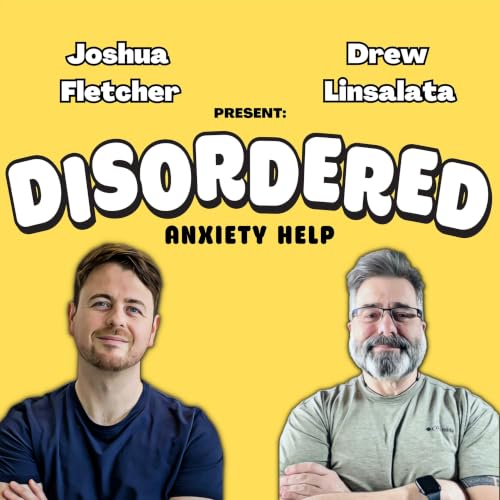
Disordered: Anxiety Help cover art

Disordered: Anxiety Help

Disordered: Anxiety Help

By: Josh Fletcher and Drew Linsalata
Listen for free

About this listen

Disordered is the podcast that delivers real, evidence-based, actionable talk about anxiety disorders and anxiety recovery in a kind, compassionate, community-oriented environment. Josh Fletcher is a qualified psychotherapist in the UK. Drew Linsalata is a therapist practicing under supervision in the US. They're both bestselling authors in the anxiety and mental health space. Josh and Drew are funny, friendly, and they have a knack for combining lived experience, formal training, and professional experience in an encouraging, inspiring, and compassionate mental health message.Josh Fletcher and Drew Linsalata Hygiene & Healthy Living Psychology Psychology & Mental Health
Episodes
  • Anxiety Disorders and Sneaky Compulsions (Episode 151)
    Apr 10 2026

    Want to talk about what you heard here? We're hanging out in the Disordered community space:

    https://disordered.fm/community

    ---

    This episode of Disordered dives into the concept of sneaky compulsions. Many people struggling with anxiety or OCD often find themselves performing behaviors that they do not immediately recognize as compulsions. These can look like productive research, seeking reassurance through a joke, or even "checking" to see if you still feel calm.


    Drew and Josh discuss how these behaviors are often avoidance or escape mechanisms in disguise. Whether it is asking a therapist if you are the worst case they have ever seen or using AI to obsess over a body sensation, these actions are designed to provide short term relief while keeping you stuck in the anxiety cycle.


    Key topics covered in this episode:

    * Why we mask compulsions as personality traits or curiosity.

    * The "reassurance seeker's workaround" of projecting issues onto others.

    * How gathering more information can actually be a form of avoidance.

    * Real life examples from the community about catching sneaky compulsions in the moment.

    * The importance of psychological flexibility and learning to be with difficult feelings instead of trying to fix them.


    ---

    The Disordered Guide to Health Anxiety is now available. If you're struggling with health anxiety, this book is for you.

    ---

    Struggling with worry and rumination that you feel you can't stop or control? Check out ⁠⁠⁠⁠⁠⁠⁠⁠⁠⁠⁠⁠⁠⁠⁠⁠⁠⁠⁠⁠⁠⁠⁠⁠⁠⁠⁠⁠⁠⁠⁠⁠⁠⁠⁠⁠⁠⁠⁠⁠⁠⁠⁠Worry and Rumination Explained⁠⁠⁠⁠⁠⁠⁠⁠⁠⁠⁠⁠⁠⁠⁠⁠⁠⁠⁠⁠⁠⁠⁠⁠⁠⁠⁠⁠⁠⁠⁠⁠⁠⁠⁠⁠⁠⁠⁠⁠⁠⁠⁠, a two hour pre-recorded workshop produced by Josh and Drew. The workshop takes a deep dive into the mechanics of worrying and ruminating, offering some helpful ways to approach the seemingly unsolvable problem of trying to solve seemingly unsolvable problems.

    ---

    Want to ask us questions, share your wins, or get more information about Josh, Drew, and the Disordered podcast? Send us an email or leave a voicemail on our website.

    Show More Show Less
    48 mins
  • Same Time Next Week - Anxiety Recovery in the "Gaps" (Episode 150)
    Apr 3 2026

    Want to talk about what you heard today? Check out the Disordered Community space:

    https://disordered.fm/community

    ----

    In this milestone episode of Disordered, we discuss the concepts in Josh's upcoming book. The conversation focuses on the gaps in anxiety recovery and the modern hurdles that prevent people from effectively practicing desensitization.


    They break down how the obsession with "optimization" and the "wellness brosphere" often becomes a distraction from the actual work of recovery. Using case studies from the book, they examine the different ways people try to avoid vulnerability by using hacks or curated identities.


    CASE STUDIES:


    Magnus: A young man with agoraphobia who tries to "alpha" his way out of his annex. He relies on supplements and wellness protocols rather than facing the fear directly.


    Lia Su: A wellness influencer who hides severe OCD behind a perfect online persona. Her story explores how making mental health an identity can lead to more avoidance.


    Ruben Kane: A retired boxer dealing with gambling issues and the shame of no longer feeling like the tough guy. His story looks at how anxiety can infiltrate a singular identity.


    Miriam: A student therapist learning to navigate imposter syndrome. Josh and Drew discuss why self doubt is actually a valuable tool for growth and curiosity.


    CORE CONCEPTS


    Delayed Gratification: This explores the struggle to be patient in a world where everything else is instant.


    Vulnerability: Recovery involves moving away from fixing or regulating and moving toward being okay with being afraid.


    The Gaps: This involves identifying the subtle things we do that keep us stuck in the anxiety cycle.


    Real Fear vs Real Danger: This episode emphasizes that while the fear you feel is real, you are not in actual danger.


    Psychological Flexibility: You benefit more from learning to be with difficult internal experiences like anxiety and fear rather than trying to control or prevent them.


    Gradual Progress: Recovery is about taking small, practical steps rather than looking for a magic solution.


    BOOK INFORMATION

    Josh’s new book, Same Time Next Week, is available for pre order. If you pre order before May 14th, you can receive an exclusive ebook on intrusive thoughts and a morning anxiety audio guide.


    ---

    The Disordered Guide to Health Anxiety is now available. If you're struggling with health anxiety, this book is for you.

    ---

    Struggling with worry and rumination that you feel you can't stop or control? Check out ⁠⁠⁠⁠⁠⁠⁠⁠⁠⁠⁠⁠⁠⁠⁠⁠⁠⁠⁠⁠⁠⁠⁠⁠⁠⁠⁠⁠⁠⁠⁠⁠⁠⁠⁠⁠⁠⁠⁠⁠⁠⁠⁠Worry and Rumination Explained⁠⁠⁠⁠⁠⁠⁠⁠⁠⁠⁠⁠⁠⁠⁠⁠⁠⁠⁠⁠⁠⁠⁠⁠⁠⁠⁠⁠⁠⁠⁠⁠⁠⁠⁠⁠⁠⁠⁠⁠⁠⁠⁠, a two hour pre-recorded workshop produced by Josh and Drew. The workshop takes a deep dive into the mechanics of worrying and ruminating, offering some helpful ways to approach the seemingly unsolvable problem of trying to solve seemingly unsolvable problems.

    -----

    Want to ask us questions, share your wins, or get more information about Josh, Drew, and the Disordered podcast? Send us an email or leave a voicemail on our website.

    Show More Show Less
    44 mins
  • Failing and Bailing on Anxiety Exposures? (Episode 149)
    Mar 27 2026

    Want to talk about what you hear on this episode? Join us in the Disordered community space:

    https://disordered.fm/community

    ---

    In this episode, Josh and Drew tackle a common hurdle in anxiety recovery: what happens when an exposure feels like a "failure" or when you choose to "bail."

    An exposure is the deliberate act of evoking an anxious response. It is a way to rewire the brain by intentionally lighting up the threat response and practicing response prevention. The goal is to teach your brain that you are safe even when you feel scared, rather than trying to force yourself to feel calm.

    Many people believe that feeling high levels of anxiety during an exposure means they have failed. This is a misconception. The exposure is designed to make you feel anxious; therefore, feeling those symptoms is exactly what is supposed to happen.

    "Failure" is often a label generated by your Inner Critic based on perfectionist expectations. True growth comes from being willing to experience the discomfort, even if the execution feels "messy".

    Bailing occurs when the discomfort becomes overwhelming and you choose to retreat. While this can feel like a setback, it is often a signal that you need more self-compassion. We discuss the "punch in the face" moment. That's the the point where the plan goes out the window because the physical sensations or intrusive thoughts become intense.

    • The "Bad Day Playbook": Don't try to make it up on the fly when you're panicked. Have a pre-planned set of actions to take if an exposure doesn't go as intended.

    • Avoid "White-Knuckling": Simply "pushing through" while counting down the seconds to escape is not the same as a willing exposure.

    • The Goal is Willingness: Recovery is about changing your relationship with the anxiety, not eliminating the feeling. Even an "unplanned" exposure—like a sudden intrusive thought or a physical symptom—is an opportunity to practice these principles.

    • Go Through the Peak: If possible, try not to leave the situation at the height of your distress. Leaving on the "back end" of the peak, on your own terms, provides the best learning opportunity for your brain.

    We also share "Did It Anyway" stories from the community, including a powerful example of navigating health anxiety during a family party.

    ---


    Struggling with worry and rumination that you feel you can't stop or control? Check out ⁠⁠⁠⁠⁠⁠⁠⁠⁠⁠⁠⁠⁠⁠⁠⁠⁠⁠⁠⁠⁠⁠⁠⁠⁠⁠⁠⁠⁠⁠⁠⁠⁠⁠⁠⁠⁠⁠⁠⁠⁠⁠⁠Worry and Rumination Explained⁠⁠⁠⁠⁠⁠⁠⁠⁠⁠⁠⁠⁠⁠⁠⁠⁠⁠⁠⁠⁠⁠⁠⁠⁠⁠⁠⁠⁠⁠⁠⁠⁠⁠⁠⁠⁠⁠⁠⁠⁠⁠⁠, a two hour pre-recorded workshop produced by Josh and Drew. The workshop takes a deep dive into the mechanics of worrying and ruminating, offering some helpful ways to approach the seemingly unsolvable problem of trying to solve seemingly unsolvable problems.

    -----

    Got a question or did it anyway to share? Send us an email or voicemail on our website.


    Show More Show Less
    36 mins
All stars
Most relevant
One of the best podcasts about disordered anxiety I've ever listened to.

thank you

Wow. Just wow.

Something went wrong. Please try again in a few minutes.

Matter or fact, sensible, calming podcast which feels on your side, offering practical, realistic and evidence-based approaches to help with problems. Powerful, funny, joyous at times, never not interesting. Love
It. It’s added to the toolbox of help for me. Thanks!

So important!

Something went wrong. Please try again in a few minutes.

love this podcast really informative and helps turn something that is very scary into something that really isn't! education on anxiety makes it so much easier to understand and handle. These guys are fantastic! Thankyou josh and drew!

amazing podcast

Something went wrong. Please try again in a few minutes.

These two truly understand severe anxiety and they make me belly laugh, which is just what you need when you're going through an anxious period. I love that they're educational without being condescending, and they celebrate big wins (which may seem tiny to others).

Best anxiety podcast

Something went wrong. Please try again in a few minutes.