• How extreme heat is changing Europe
    Jul 1 2026

    This week, temperatures across much of Europe reached above 40 C. In parts of Spain and Portugal, it was hotter than the Sahara Desert.


    Governments are telling citizens to stay indoors. Schools have closed. Wildfires have spread. Nuclear reactors have reduced their output because rivers have become too warm to cool them efficiently. The World Health Organization says Europe’s heat is responsible for 1,300 deaths since June 21st.


    For generations Europe built its cities, homes, public spaces and tourism industry around the assumption that summers would be hot, but bearable. That assumption is beginning to change.


    The Guardian’s Europe environment correspondent Ajit Niranjan joins us to talk about what happens when a whole continent discovers it was built for a climate that no longer exists.


    For transcripts of Front Burner, please visit: https://www.cbc.ca/radio/frontburner/transcripts

    Show More Show Less
    30 mins
  • Why are prediction markets coming to Canada?
    Jun 30 2026

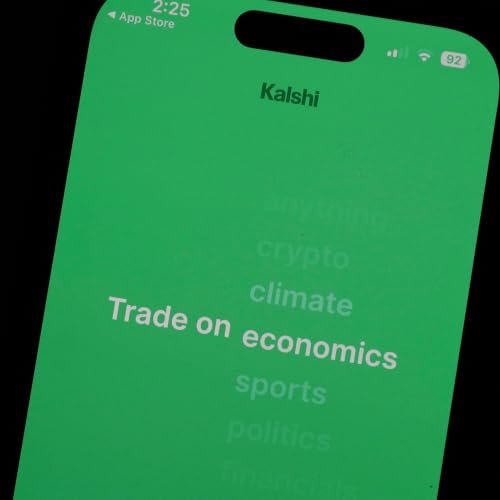
    Investment company Wealthsimple is partnering with Kalshi to launch Wealthsimple Predict. It’s an app that’ll allow Canadians to place bets on things like Bank of Canada interest rates, job numbers and long term weather patterns.


    This comes at a time where there’s growing scrutiny on prediction markets in the U.S. for misleading advertising and susceptibility to insider trading. So why are young investors, especially Gen Z, fuelling the demand for prediction markets and other high risk and speculative ways to make money? And what are the risks of companies like Wealthsimple leaning into the gamification of the economy?


    Charles Martineau, Associate Director of Research at the Rotman Financial Innovation Hub at the University of Toronto, joins us to talk about the phenomenon and what the data tells us about who actually wins on prediction markets.


    For transcripts of Front Burner, please visit: https://www.cbc.ca/radio/frontburner/transcripts

    Show More Show Less
    22 mins
  • What’s fuelling residential school denialism?
    Jun 29 2026

    A warning: this episode discusses the trauma and harms surrounding Canada's residential school history. Please listen with care.


    So much of what we know about Canada's residential schools has been established as fact. More than 150 thousand Indigenous children and youth were taken from their families and required to attend these schools. Several thousand students died.


    Although all of this is well-documented and verified, there has been a growing discourse calling those facts into question. Researchers, commentators and some politicians have really zeroed in on the 2021 discovery of suspected graves near a former residential school in Kamloops.


    Academics and Indigenous leaders call this residential school denialism — similar to Holocaust denialism. Many of them have called for adding the denial of residential school history to the Criminal Code as a form of hate speech.


    Earlier this month, a Nunavut senator brought forward a motion to amend Bill C-9, the Liberals’ anti hate bill, to do just that – but it was voted down.


    Sean Carleton and Niigaan Sinclair have been tracking the rise of residential school denialism in Canada. Their book, “Truth Before Reconciliation: Confronting Residential School Denialism”, comes out this September.


    For transcripts of Front Burner, please visit: https://www.cbc.ca/radio/frontburner/transcripts

    Show More Show Less
    32 mins
  • Solving the Nord Stream attack mystery
    Jun 26 2026

    In the fall of 2022, Danish authorities scrambled fighter jets to investigate a strange disturbance in the Baltic Sea. What they found was extraordinary.


    An enormous geyser had opened up on the water’s surface. It was evidence that something deep below had ruptured with enormous force.


    Just days earlier, a team of divers had planted explosives along Nord Stream, a multi-billion dollar network of pipelines carrying Russian natural gas into Germany.


    In the days and months that followed, all kinds of theories emerged about who might have staged the attack, and why. Now, after years of investigations, intelligence leaks, arrests, and reporting across Europe, a much clearer picture of what happened that night has emerged.


    Bojan Pancevski is the Chief European Political Correspondent for The Wall Street Journal, and the author of the new book ‘The Nord Stream Conspiracy: The Inside Story of the Explosions That Shook the World’


    He joins us today to discuss one of the most consequential acts of infrastructure sabotage in recent history and the small group of Ukrainian civilian divers who, according to his reporting, pulled it off.


    For transcripts of Front Burner, please visit: https://www.cbc.ca/radio/frontburner/transcripts

    Show More Show Less
    38 mins
  • Incel violence and the Montreal shooting
    Jun 25 2026

    On Monday morning, a 25-year-old man opened fire in Montreal, leading to a shootout that left three people dead.


    A few hours later, police found a manifesto written by the shooter. It contained a laundry list of grievances but, more than anything, it bore the telltale signs of someone who had spent a lot of time immersed in the world of incels.


    The incel, or involuntary celibate, movement was born online but has occasionally inspired real world violence. Elle Reeve is a correspondent for CNN and the author of Black Pill: How I Witnessed the Darkest Corners of the Internet Come to Life, Poison Society, and Capture American Politics.


    She joins the show to explain why young men are drawn to this movement – and why it keeps leading to violence.


    For transcripts of Front Burner, please visit: https://www.cbc.ca/radio/frontburner/transcripts

    Show More Show Less
    30 mins
  • Inside Iran as peace talks continue
    Jun 24 2026

    Margaret Evans is CBC’s Senior International Correspondent. She just returned from a week-long reporting trip in Tehran, speaking to Iranians on the ground about the impact of the war and the preliminary peace agreement.


    In a Canadian exclusive, CBC News reported from Iran with permission of the country’s government, who put restrictions on journalists but have no say over what we decide to publish or broadcast.


    For transcripts of Front Burner, please visit: https://www.cbc.ca/radio/frontburner/transcripts

    Show More Show Less
    26 mins
  • Is the U.K. ungovernable?
    Jun 23 2026

    After a weekend of speculation, U.K. Prime Minister Keir Starmer appeared on the steps of 10 Downing Street on Monday and announced that he would be stepping down.


    He’s now the sixth British Prime Minister to resign in the last 10 years, continuing a pattern many thought would end after he won a majority government with the Labour Party in a landslide just two years ago.


    Zoë Grünewald is a freelance journalist based in London, England. She’s also a regular panelist on the politics podcast ‘Oh God, What Now?’. She’s here to talk about the conditions that have made it so hard for the country to hold onto a Prime Minister, and what that means for people in the U.K.


    For transcripts of Front Burner, please visit: https://www.cbc.ca/radio/frontburner/transcripts

    Show More Show Less
    26 mins
  • Liberals push through bills as Parliament wraps
    Jun 22 2026

    It was a busy end to the season in the House of Commons. CBC Chief Political Correspondent Rosemary Barton is here to talk about what happened, what it tells us about Carney’s majority government, and what we can expect in the months to come.


    For transcripts of Front Burner, please visit: https://www.cbc.ca/radio/frontburner/transcripts

    Show More Show Less
    23 mins