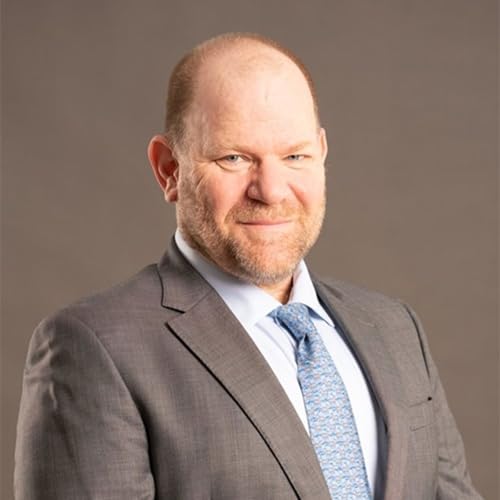
Rick Brennan, an Australian emergency physician appointed a Member of the Order of Australia in 2025, recounts the pivotal early decision that shaped his professional life — choosing public health and humanitarian work over clinical medicine after being offered a full-time role with the US Centers for Disease Control. He describes the emotional weight of that moment, knowing it meant the end of his clinical career, but reflects that he never looked back. He also discusses the countrywide mortality surveys he led in the Democratic Republic of the Congo during his decade at the International Rescue Committee, which documented over five million excess deaths — the vast majority caused not by direct violence but by the collapse of the health system.
A substantial portion of the conversation covers Brennan's work in Liberia under President Ellen Johnson Sirleaf, where strong national leadership from a Nobel Peace Prize–winning president and a transparent, dedicated minister of health helped the country meet the Millennium Development Goals for child mortality — a remarkable achievement for the seventh poorest country in the world, which reduced child mortality faster than any other country in Africa. Brennan highlights the role of well-designed transition funding from the US Office of Foreign Disaster Assistance in averting the closure of health facilities as humanitarian funding declined and development funding was slow to materialise.
The discussion turns to the 2014 West Africa Ebola outbreak, where Brennan candidly acknowledges the World Health Organization's early failures, its slow scale-up across country office, regional and headquarters levels, and the organisation's struggle to communicate its subsequent course corrections — including then-Director-General Margaret Chan's concern that doing so would sound defensive. He reflects on the importance of community engagement and working through local NGOs with established field presence, rather than arriving with a top-down expert approach. The crisis ultimately catalysed WHO's shift toward an all-hazards emergency management framework and the establishment of the WHO Health Emergencies Programme under Pete Salama in 2016, bringing preparedness, detection, response and recovery work under a single program.
Brennan details his experience covering Afghanistan following the Taliban takeover, including the pragmatic diplomacy required to convene meetings in Doha that brought Taliban health officials together with major donors who were officially prohibited from engaging with the new government. He describes the development of an interim health strategy with buy-in from UNICEF, the World Bank and USAID that became the basis for continued donor funding through UN agencies rather than the government. The conversation also touches on the impact of recent US aid cuts, what Australia can do to help fill emerging gaps in the region, and the unfinished business of the grand bargain — particularly on unearmarked funding, cash transfers, pooled funding and the localisation agenda, where funding through local partners reached only four and a half per cent by 2023 against a 25 per cent target.
The episode's most confronting segment addresses Gaza, where Brennan outlines the scale of devastation: over 70,000 deaths, 170,000 injured, 42,000 facing lifetime disabilities, and 92 per cent of dwellings damaged or destroyed. He discusses the systematic obstruction of humanitarian access negotiated through COGAT, with well over 50 per cent of mission requests denied at times, and WHO's documentation of more than 840 attacks on healthcare in Gaza and over 900 in the West Bank since the conflict began. Brennan notes that WHO's global surveillance system has recorded over 9,200 attacks on healthcare since 2018, resulting in more than 4,000 deaths — averaging three attacks and one and a half deaths per day — with not a single person held to account. He points to the polio vaccination campaign, which achieved 95 per cent coverage during a ceasefire, as evidence of what can be accomplished when access and resources are provided, and calls for a global alliance for the protection of healthcare grounded in the political will of member states.
Devpolicy Talks is the podcast of the Australian National University's Development Policy Centre.
Read and subscribe to our daily blogs at devpolicy.org.
Learn more about our research and join our public events at devpolicy.anu.edu.au.
Follow us on Twitter, Facebook, LinkedIn and Instagram for latest updates on our blogs, research and events.
You can send us feedback, and ideas for episodes too, to devpolicy@anu.edu.au.


 51 mins
 May 15 202659 mins
 1 hr and 35 mins
 1 hr and 19 mins
 2 hrs and 12 mins
 36 mins
 47 mins
 Oct 10 202536 mins