Episodes

  • "Sell Your Cloak and Buy a Gun?"
    May 11 2026
    Why context still matters when Christians reach for Luke 22:36 Every few months, the debate flares up again about guns and weapons. Even in countries that generally don't have a high level gun issue. Someone, almost always identifying as a Christian, drops Luke 22:36 like a trump card: "Jesus told his disciples to buy swords. He would want you armed today." It's a compelling sound bite. It's also a textbook case of reading a verse while ignoring everything around it. Don't get me wrong we all do it sometimes. But, in cases like this it is profoundly dangerous.
    Show More Show Less
    6 mins
  • Slowing Down: My Journey Begins with ‘Prescribe Nature’
    May 11 2026
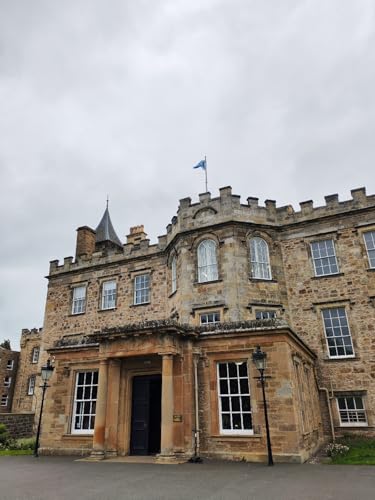
    There is something transformative about the air at Newbattle Abbey College. This week, I took a step that feels like a deep breath for the soul: I officially started Prescribe Nature. ​If you haven’t heard of it, Prescribe Nature is an 8-week outdoor wellbeing programme designed for adults who need a little extra support—whether that’s improving mental health, reducing social isolation, or simply building back lost confidence. It’s held in the stunning, peaceful woodlands of Newbattle, and honestly, the setting alone feels like medicine... This podcast reflects on week one and two of this journey.
    Show More Show Less
    3 mins
  • A Great Power
    May 10 2026
    The sermon emphasizes the greater power of love for Jesus, which is stronger than all tribulation, affliction, and death, and offers a promise of divine life and bliss for those who follow Him. In this sermon, the speaker discusses the power of love for Jesus in overcoming affliction, temptation, suffering, and even death. The story of Father Maximilian Kolber, a priest martyred in Auschwitz, is shared as an example of someone who chose to die out of fervent love for Jesus. Despite being in a starvation cell, Father Kolber's love for Jesus was so strong that he did not scream or lose his mind like others. The speaker emphasizes that divine life, which is fueled by the love of God, is greater than any tribulation or affliction we may face. The sermon encourages listeners to cultivate a deep love for Jesus and to accompany him on his path.
    Show More Show Less
    5 mins
  • Simply Fellowship — Episode 7: Not in Temples Made with Hands
    May 10 2026
    Welcome ​Welcome to Above All Love. This is Simply Fellowship — the Good News, quietly told. ​This is a gentle space. No pressure, no performance. You don't need to have answers about buildings or belonging, or about where God is or isn't. You don't need to have a church to come back to, or feel the loss of one that has gone. ​You're welcome exactly as you are, wherever you are reading this — in a home, in a garden, on a phone in a waiting room, or anywhere else entirely. ​If you need to read slowly, or stop and come back — that's completely fine. There's no right way to be here. Just be here. ​Hymn ​We begin with a hymn verse. Read it slowly. You might want to sit with each line before moving on. ​O thou not made with hands, Not throned above the skies, Nor walled with shining walls, Nor framed with stones of price, More bright than gold or gem, God's own Jerusalem. — F. T. Palgrave ​Prayer ​Living God, ​Thank you that you are not confined to any building we have made for you. Thank you that no steeple contains you, no locked door shuts you out, no sale sign diminishes you. ​Meet us today wherever we are — in our homes and our routines, our advocacy and our wandering, our walks through the woods and our late nights on screens. Remind us that we carry something we did not build and cannot lose. Remind us that the Presence is not somewhere we have to travel to. ​And if we have grieved the loss of a place that felt holy to us — let us grieve it honestly, and then find you here, still, in this body, in this breath, in this moment. ​Amen. ​Old Testament Anchor ​Before we reach the New Testament's radical rethinking of the temple, we need to hear the older voice that already knew this truth. ​"Heaven is My throne, and earth is My footstool. Where is the house that you will build Me? And where is the place of My rest? For all those things My hand has made, and all those things exist," says the Lord. "But on this one will I look: on him who is poor and of a contrite spirit, and who trembles at My word." — Isaiah 66:1–2 (NKJV) ​This is the word underneath the early church's astonishing shift. Long before Stephen stood before the Sanhedrin, long before Paul preached in Athens, Isaiah had heard God say it plainly: the house you could build me is not the house I want. What I look for is not architecture. It is a heart. ​Scripture ​Our reading today is drawn from Acts 7:48–50 and Acts 17:24 (Easy English Bible). ​"But the Most High God does not live in buildings that people make. As the prophet wrote: The Lord says, 'Heaven is my throne. The earth is a place to rest my feet. What kind of house would you build for me? Where would I rest? I myself have made all these things.'" ​"God made the world and everything in it. He is Lord of heaven and earth. He does not live in buildings that people make." ​Devotion ​In Scotland, it is becoming a common sight to see a For Sale sign outside a kirk. ​Many of these buildings — some centuries old, some the anchor of a community for generations — are being converted into flats, bars, community centres. On a cultural level, it can feel like loss. It is a visible sign of a shifting landscape. But we must be careful what we mourn. ​Because the buildings are just that. Bricks and mortar. The work of human hands, offered to God, yes — but not the dwelling place of God. ​Stephen knew this, and it cost him something to say it. Standing before the Sanhedrin, accused of speaking against the temple, he turned the accusation back into a question: has God ever actually lived there? He quoted Isaiah and then said it plainly: the Most High does not dwell in temples made with hands. ​The whole arc of the Old Testament had been bending toward this truth: God cannot be housed. The temple was always a meeting place, not a cage. Paul understood this too. Standing in Athens — a city of extraordinary temples — he told the philosophers something their architecture had never quite managed to say: He is the one in whom we live and move and have our being. ​In 1 Corinthians 6, Paul turns to the believers and says: do you not know that your body is the temple of the Holy Spirit who is in you? ​The architecture God has chosen is human flesh. ​There is something clarifying about the absence of a building. It asks you the question directly: where, then, do you think God is? Where do you expect to meet him? ​The answer, it turns out, is: here. Wherever here is. ​In the home where the morning prayer is said. In the advocacy meeting where someone is fighting for a person who cannot fight for themselves. In the woods where the trees do not ask you to perform. In this screen, in this moment, between these words and whoever is reading them. ​Wondering Questions ​I wonder which spaces have felt most holy to me — and what it was that made them feel that way? ​I wonder whether I have sometimes looked for God in a ...
    Show More Show Less
    7 mins
  • The Silent Death of the Jury: Is the UK Moving to a "Pre-Magna Carta" Justice System?
    May 4 2026
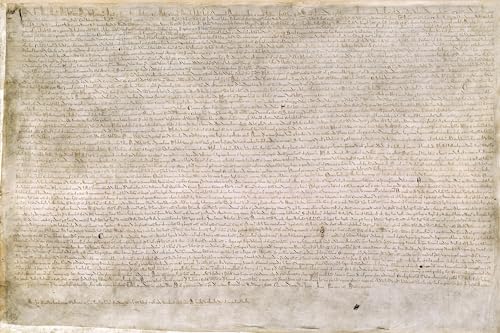
    By David Holdsworth Read by Alan (Eleven Labs) For over 800 years, the right to be tried by a jury of one’s peers has been the "golden thread" of British liberty. It was the ultimate safety valve—a way for 12 ordinary citizens to stand between a defendant and the power of the state. ​But as we navigate 2026, that thread is being cut in the name of "efficiency" and "order." ​"No free man is to be arrested, or imprisoned... except by the lawful judgment of his peers or by the law of the land." — Magna Carta, Clause 39 (1215) ​1. The Rise of the "Swift Courts" ​Under the Courts and Tribunals Bill 2026, the government has introduced judge-only "Swift Courts" for mid-level ("either-way") offences. Previously, a defendant could choose a jury trial for crimes like criminal damage or public order offences. Now, that choice is gone. We are moving toward a system where the state is both the accuser and the sole judge, removing the "judgment of peers" that has protected us since Runnymede. ​2. Preachers and the "Hate Speech" Trap ​It isn't just political activists being silenced. Street preachers are being arrested at an alarming rate for simply expressing traditional religious views that bystanders find "offensive." This creates a profound moral dilemma for those who feel a higher calling to speak. ​"Judge for yourselves whether it is right in God's sight to obey you rather than God. For we cannot help speaking about what we have seen and heard." — Acts 4:19-20 ​When the law of the land conflicts with the law of conscience, the preacher is placed in a "Pre-Magna Carta" dock—judged by a state official rather than a jury who might understand the nuance of faith and free speech. ​3. Protesters and the Terror Label ​The most extreme shift has been the treatment of pro-Palestine protesters. By treating groups like Palestine Action as "terrorist," the government can bypass standard rights. In these juryless trials, judges are often banning defendants from mentioning their motivations. A "peaceable Quaker granny" can be convicted for damage without a jury ever hearing that she acted to stop what she believes is a genocide. ​"Have you ever had to choose between your beliefs and the law? ... What does 'speaking truth to power' mean to you?" — Quaker Queries (Social Justice & Conscience) ​4. The Pandemic’s Lingering Shadow ​Many of these changes were test-driven during the pandemic. The use of "Justice by Video" and the suspension of assembly rights for "public health" provided the blueprint. The record court backlog—partially a result of pandemic mismanagement—is now being used as the primary excuse to abolish jury trials forever. ​Conclusion: Ignorance or Exhaustion? ​The UK is currently an experiment in whether a Western democracy can maintain the appearance of freedom while dismantling the mechanisms (like juries and free speech) that protect it. ​Between the "New Normal" of the pandemic and the current "Managerial Justice" model, the British public is being exhausted into accepting a system where "legal" and "just" are no longer the same thing. ​What do you think? In a world where preachers, grandmothers, and activists are processed by "Swift Courts" for their conscience, can we still claim to live in a land of liberty? *Image source: Wiki Commons
    Show More Show Less
    4 mins
  • New Commandment Love
    May 4 2026
    Ben Torrey teaches on the importance of New Commandment love, which is the love that Jesus commands us to have for one another, as He loved us, willing to suffer and die for us.
    Show More Show Less
    8 mins
  • Intro to "The Four Loves"
    May 4 2026
    C.S. Lewis shares the four Greek words for love.
    Show More Show Less
    1 min
  • The Practice of the Prescence of God: 05 First Letter
    May 4 2026
    The Practice of the Presence of God is a collection of letters and transcriptions of conversations, compiled by a disciple of Brother Lawrence. Brother Lawrence was a Carmelite monk and head cook in his monastery’s kitchens. He quickly gained an international reputation as a mystic and spiritual counselor. The Practice of the Presence records his last words of advice to his friends and disciples, as he suffered from an unnamed illness which would eventually take his life. (Description written by Kirsten Ferreri.)
    Show More Show Less
    4 mins